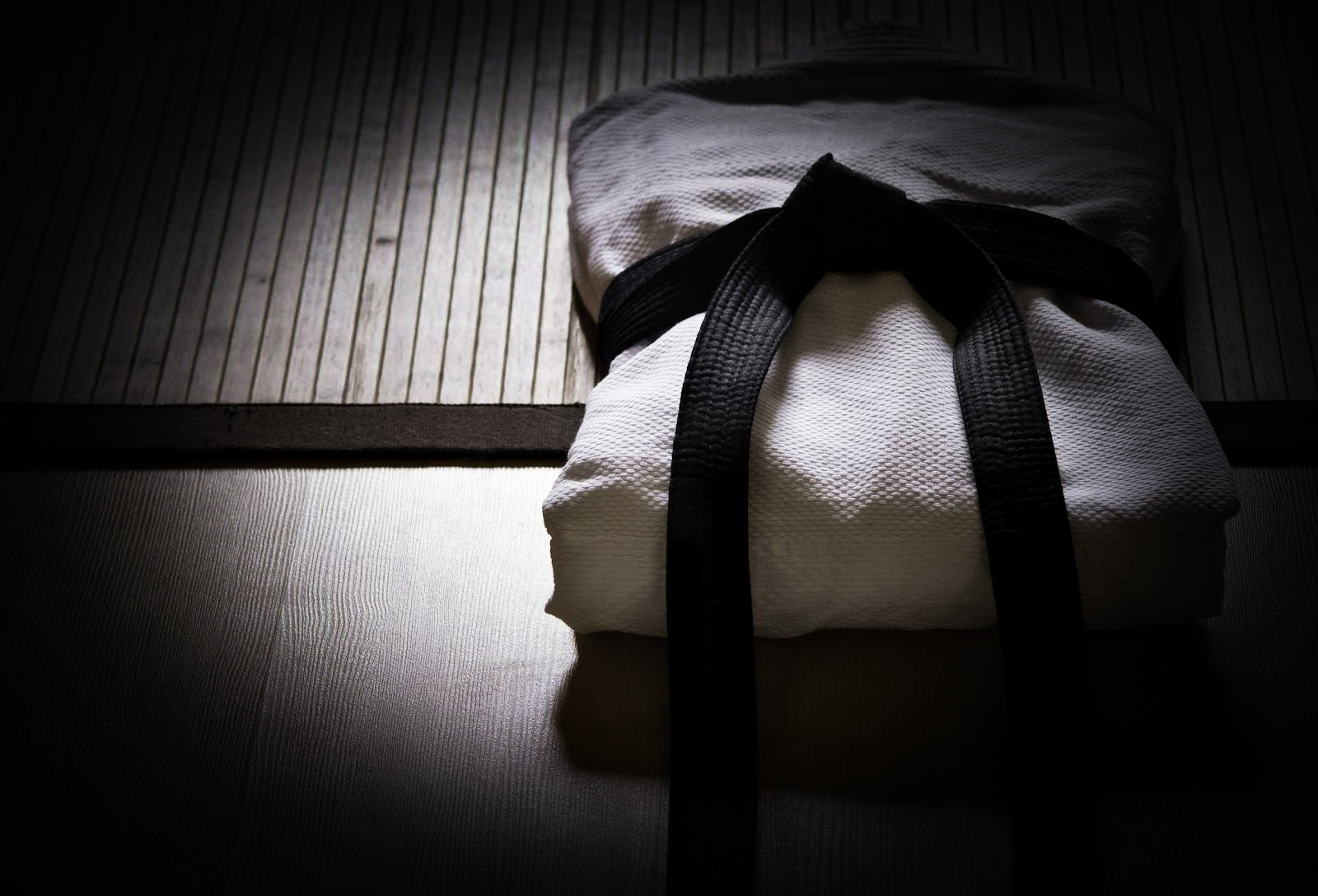
Every martial artist can remember the moment when the journey began. Sometimes it starts with a simple curiosity, sometimes with a desire for strength or discipline, and sometimes with the quiet realization that there must be a deeper way to challenge and improve oneself. At the beginning, few of us understand that stepping onto the training floor for the first time is not merely the start of learning techniques—it is the beginning of a path that can shape an entire lifetime.
My own journey into the martial arts began many years ago when I first encountered the disciplined world of traditional training. Like many beginners, I was drawn by the outward aspects of martial arts—the physical techniques, the precision of movement, and the quiet confidence displayed by those who had clearly spent years refining their skills. There was something unmistakably powerful about that old school dojang. It was a place where effort mattered, where improvement was earned, and where respect and discipline formed the foundation of every interaction.

It was in that environment that I began studying the Korean martial art of Traditional Tang Soo Do. At the time, I could not have imagined how deeply that decision would influence the years ahead. What began as an interest in learning how to move, strike, and defend gradually evolved into something much more meaningful. Training revealed itself not as a temporary activity, but as a discipline capable of shaping both body and character over time.
One of the defining influences on my early training was my instructor, the late Master Yun Tak Bong. Under his guidance I was introduced to the principles that lie beneath the physical techniques of Tang Soo Do. While the movements of punching, kicking, and blocking were important, they were never presented as the ultimate goal. Instead, they were tools—methods for developing discipline, focus, and perseverance.
Traditional martial arts training is built on repetition. Techniques are practiced again and again, often for years, with the understanding that true skill emerges slowly. At first this can be frustrating for beginners who expect rapid progress. Yet over time, the value of that repetition becomes clear. Each practice session builds upon the last, gradually refining balance, timing, coordination, and mental concentration.
Training in Korea was two-to-three-hour classes six days a week, and when I had off days from my military police duties I would go twice a day. Each and every class started with the basics, repeating them as we walked up and down the dojang floor. They say that “Repetition is the Mother of Skill”, and that was proven to be true in Master Yun’s dojang.
Equally important is the atmosphere of respect that surrounds traditional martial training. The training hall—often referred to as the dojang—is more than a place to exercise. It is a place where hierarchy, courtesy, and discipline are maintained in order to create an environment where learning can flourish. Students bow to their instructors, acknowledge one another as training partners, and recognize that the knowledge being shared comes from generations of practitioners who devoted themselves to the art.
In this way, martial arts training connects the individual practitioner to a much larger tradition. The techniques practiced today did not appear overnight. They were refined through decades and centuries of experience, passed down from teacher to student in an unbroken chain of instruction. To begin training is to become part of that lineage, accepting both the benefits and the responsibilities that come with it.
As the years pass, the motivations that bring someone into martial arts often begin to change. A student who initially sought physical strength may discover the value of discipline and patience. Someone who came to learn self-defense may develop a deeper appreciation for the philosophical and personal growth that martial training encourages. The practice becomes less about proving oneself and more about improving oneself.
This gradual shift in perspective is one of the defining characteristics of the martial path. In the early stages of training, progress is often measured in visible achievements—learning new techniques, advancing in rank, or demonstrating physical skill. Later, however, progress becomes more internal. It is seen in the development of patience, humility, and the ability to continue training with quiet determination regardless of obstacles.
The martial arts also have a unique way of revealing their true lessons only over time. What seems simple at the beginning often proves far more complex after years of study. A basic stance may appear straightforward until one begins to understand the balance, alignment, and structural integrity required to perform it correctly. A simple block or strike may contain layers of timing, distance, and body mechanics that can take years to fully appreciate.
Because of this, martial arts training is not something that can be rushed. It unfolds gradually, revealing new insights at each stage of development. Those who remain committed to the practice eventually discover that the martial path is not defined by a single moment of mastery, but by the continuous process of learning and refinement.
Looking back across decades of training, it becomes clear that the most important decision was not mastering any particular technique or achieving any specific rank. The most important decision was simply choosing to begin—and then choosing to continue.
The path of martial arts is built on consistency. One training session leads to another, one lesson builds upon the last, and slowly the practice becomes part of daily life. Over time the movements become more natural, the discipline becomes more ingrained, and the lessons learned on the training floor begin to influence other aspects of life.
In this sense, the martial arts offer something rare in the modern world: a structured path of personal development that can last an entire lifetime. The physical training strengthens the body, the mental focus sharpens the mind, and the philosophy of perseverance provides guidance through challenges both inside and outside the training hall.
For anyone standing at the beginning of this journey, the road ahead may seem long and uncertain. Yet that is precisely what makes the martial path so rewarding. Each step forward reveals new lessons, new challenges, and new opportunities for growth.
The journey begins with a single step onto the training floor—but if one continues long enough, that step can become the beginning of a lifelong path.

