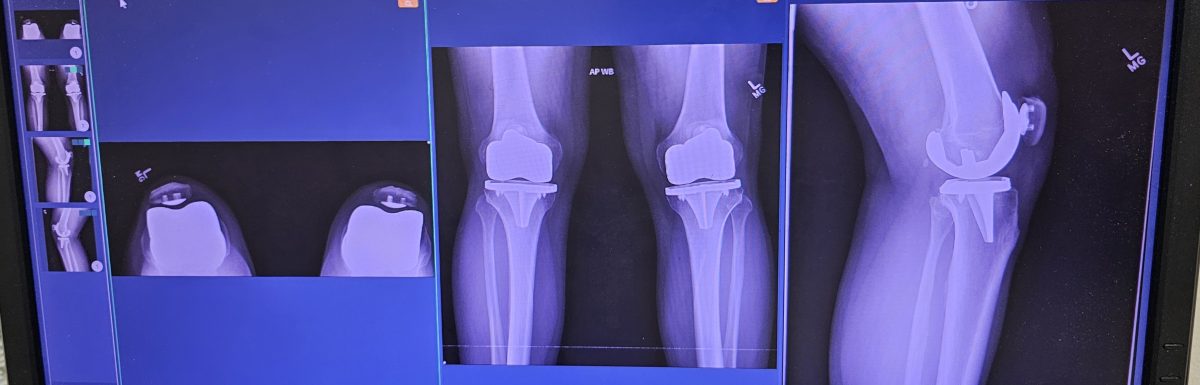
There comes a moment in every serious martial artist’s life when the body begins to speak more loudly than the ego. For some, it’s a minor injury. For others, like myself, it is something far more profound— two shoulder surgeries, bilateral knee replacements, foot surgery, the kind of life events that forces a complete reevaluation of what it means to train, to progress, and ultimately, to walk the martial path.
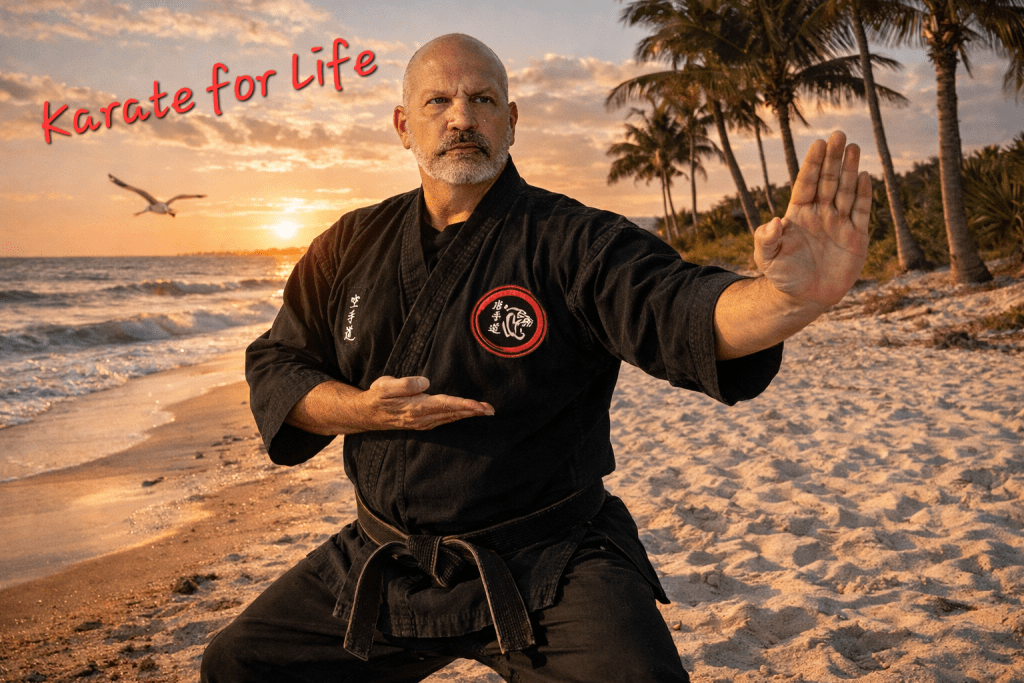
At first, it can feel like loss.
- Loss of flexibility
- Loss of speed
- Loss of explosiveness.
- Loss of the version of yourself that once moved without hesitation.
But if you stay on the path long enough, you begin to understand something deeper: martial arts were never about preserving your physical peak. They were always about refinement—of movement, of mind, of spirit. Physical limitation does not end the journey. It clarifies it.
The Shift from Performance to Purpose
In earlier years, training often revolves around performance—how high you can kick, how fast you can move, how powerfully you can strike. There is nothing inherently wrong with this. It builds discipline, strength, confidence, and in my younger years, this was my focus.
But when the body changes, performance must give way to purpose.
After my surgeries, I could no longer train the way I once did. Deep stances, ballistic movements, and repetitive impact required careful reconsideration. At first, this felt like regression. In truth, it was refinement.
Every movement is now intentional. Every technique has to justify its existence.
Instead of asking, “How strong is this?” I am asking, “Is this necessary?”
Redefining Power
One of the greatest misconceptions in martial arts is that power is purely physical. That it comes from youth, muscle, and speed.
But real power—lasting power—comes from structure, timing, and efficiency.
With limitations in the knees, I had no choice but to refine:
- My stances became higher, but more aligned
- My transitions became smoother, not forced
- My techniques relied less on impact and more on positioning
In many ways, this brought me closer to the essence of traditional martial arts. Power without excess. Movement without waste.
The body may lose capacity, but the art gains clarity.
Looking back on my time with Master Yun, I see these principles in his movements.
Adapting Without Compromising the Art
There is a fine line between adaptation and dilution. The goal is not to “water down” the Tang Soo Do I was taught, but to express it through a different physical lens.
For example:
- Kicking techniques may be lowered, but their mechanics remain as precise as I am able.
- Stances may be shortened, but their purpose—stability, readiness—remains intact.
- Forms (hyung/kata) may be performed with modified depth, pivot, or technique, but not with reduced intention.
The external shape may change. The internal principles must not.
This is where experience becomes invaluable. A beginner might struggle to adapt without losing meaning, but a seasoned practitioner understands the why behind the movement—and that allows for intelligent modification.
The Rise of Internal Training
Physical limitation often opens the door to aspects of training that were previously overlooked.
Breathing.
Timing.
Mental focus.
Awareness of tension and relaxation.
What was once secondary becomes primary.
Training slows down—but deepens.
There is a quiet intensity that replaces outward intensity. Less noise, more substance.
In this phase of my life, martial arts begin to resemble what they were always meant to be: a lifelong discipline, not a temporary pursuit of physical excellence.
Training for Longevity, Not Victory
There is a subtle but powerful shift that occurs as I accept limitation as part of the path.
I am not training to prove something.
I am training to preserve something.
Health.
Mobility.
Clarity of mind.
Continuity of practice.
The goal is no longer to best others. It is to continue—to still be practicing, still refining, still walking the path years from now.
This is the deeper victory.
The Martial Spirit Remains Unchanged
The body ages. It adapts. It endures.
But the spirit—the will to train, to improve, to seek mastery—remains untouched unless you choose to abandon it.
In fact, adversity often strengthens it.
There is something profoundly honest about continuing to train when it is no longer easy, no longer impressive, no longer externally rewarded. This is where martial arts becomes budo—a way of life rooted in perseverance, self-perfection, and peace.
Final Reflection
Adapting martial arts for physical limitations is not about doing less.
It is about doing what matters.
It is about stripping away ego, excess, and illusion, until only the essence of the art remains.
For those of us who continue the journey as we grow older, after injury, after surgery, after the body has changed—we are not practicing a lesser version of martial arts.
We are practicing a more distilled one. We are seeking our personal expression of the art.
And in that distillation, there is a quiet truth:
The path was never about how high you could kick.
It was about how long you could walk it.